
No products
New products
-

LilyGO T-Echo Plus 868 MHz NRF52840 LoRa Meshtastic BME280 Gray (LilyGO)
99,77 € tax excl. -

-

-

LNA Wide Band 100-6000 MHz RTL-SDR V2 QPL9547
29,78 € tax excl.
Viewed products
-

LiteVNA 67 Portable...
The LiteVNA 67 is a portable vector network...
-

3500 mAh battery for Inrico T320
15,12 € -20% 18,90 €
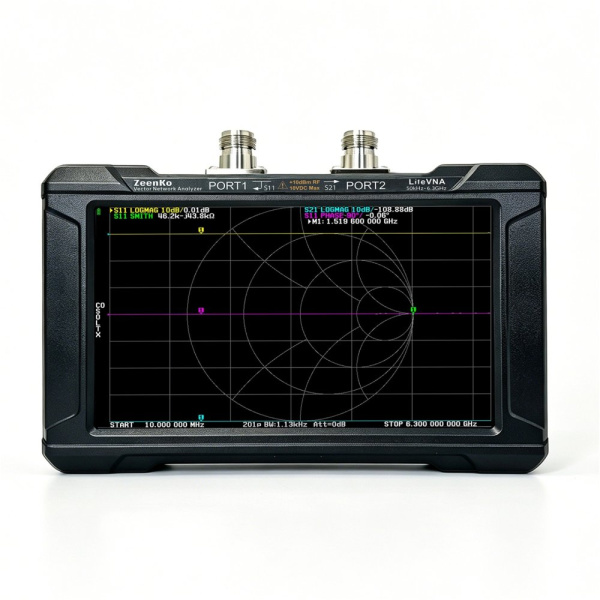
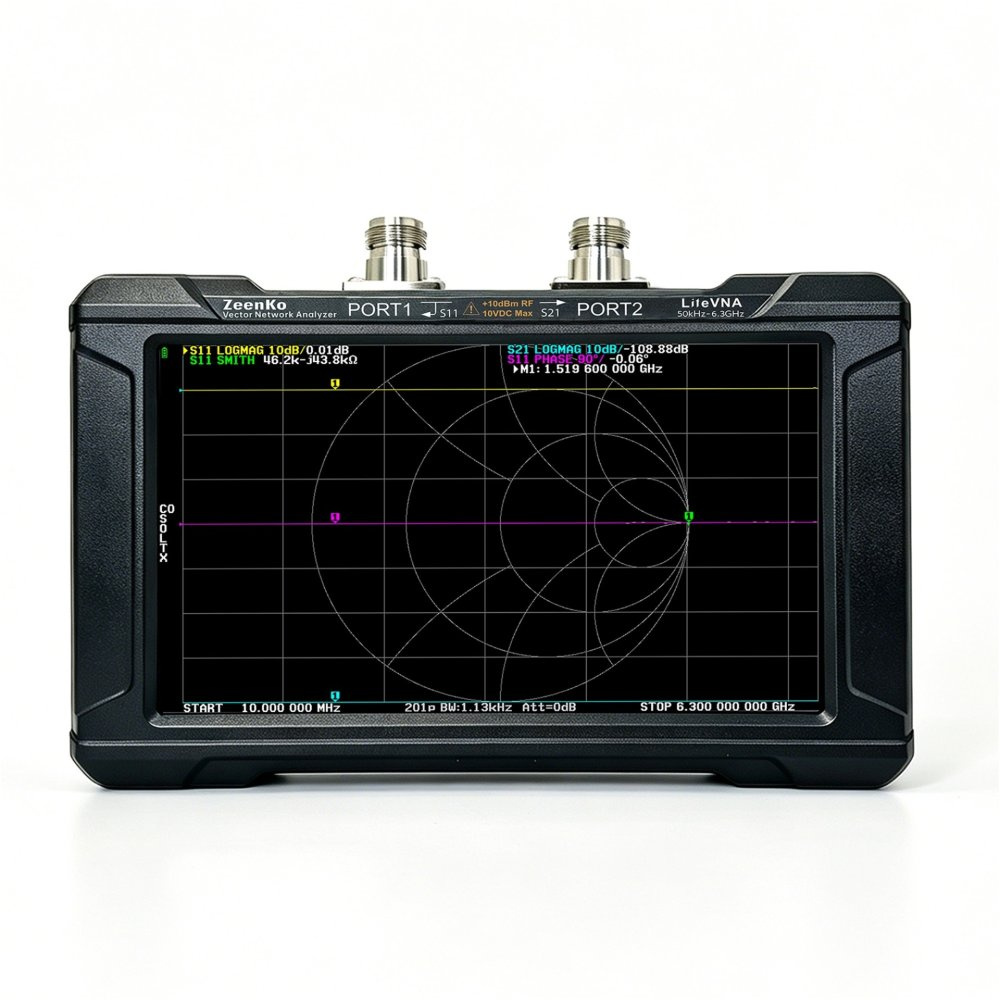

LiteVNA 67 Portable Vector Network Analyser (VNA), 50 kHz to 6.3 GHz, 7" screen, carry case
 No review at the moment
The LiteVNA 67 is a portable vector network analyser designed for RF measurements across an exceptionally wide range, from 50 kHz to 6.3 GHz. It enables the measurement of S11 (reflection) and S21 (transmission) parameters to characterise antennas, coaxial cables, filters, duplexers, couplers and many other RF circuits.
This version differs from the LiteVNA 62 and LiteVNA 64 in that it features a large 7-inch capacitive touchscreen, Type N RF connectors, a built-in 7,800 mAh battery, an improved dynamic range and a built-in source attenuator.
The LiteVNA 67 is equally suited to amateur radio applications, RF maintenance, electronics development, IoT, LoRa and Wi-Fi systems, and experimentation up to the 5 GHz and 5.8 GHz bands.
- Ultra-wide measurement range from 50 kHz to 6.3 GHz
- S11 measurement: VSWR, return loss, impedance, reactance and antenna resonance
- S21 measurements: insertion loss, response of filters, cables and RF circuits
- S21 dynamic range of >100 dB from 50 kHz to 3 GHz
- S21 dynamic range of >80 dB from 3 to 6.3 GHz
- TDR/DTF time-domain analysis using IFFT to detect faults in coaxial lines
- Large 7-inch capacitive touchscreen
- 2 Type N connectors
- Integrated source attenuator, particularly useful for characterising active RF circuits
- Built-in 7,800 mAh rechargeable battery
- Up to 1,001 scan points directly on the device
- Up to 65,535 data points via USB
- USB-C connection for linking to a computer or Android device
- microSD slot for saving measurements and screenshots
- Simultaneous display of multiple traces and up to 8 markers depending on the LiteVNA software environment
- Display formats: Smith chart, LOGMAG, phase, SWR, delay, polar coordinates, resistance, reactance and other representations of measured parameters
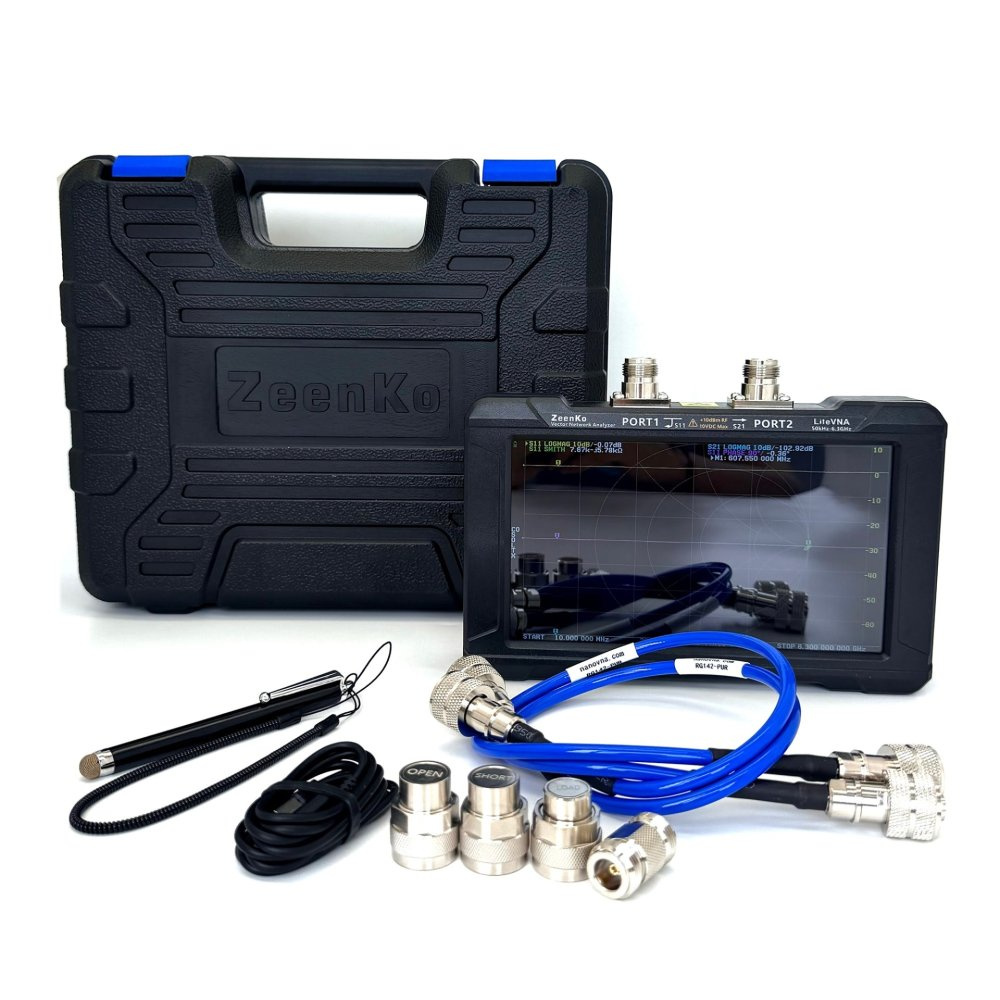
Supplied with: LiteVNA 67, Type N OPEN calibration standard, Type N SHORT calibration standard, Type N LOAD calibration standard, Type N female-to-female adapter, 2 RF test leads, USB-C cable, capacitive stylus, carrying case.
Download
Data sheet
- Type: Portable vector network analyser (VNA).
- Frequency range: 50 kHz to 6.3 GHz.
- Number of RF ports: 2.
- RF connectors: Type N.
- Measurements: S11 (reflection) and S21 (transmission).
- S21 dynamic range: greater than 100 dB from 50 kHz to 3 GHz.
- S21 dynamic range: greater than 80 dB from 3 GHz to 6.3 GHz.
- Background noise level: less than -50 dB from 50 kHz to 3 GHz.
- Background noise level: less than -40 dB from 3 GHz to 6.3 GHz.
- S11 / Return Loss performance: greater than 50 dB from 50 kHz to 3 GHz.
- S11 / Return Loss performance: greater than 40 dB from 3 GHz to 6.3 GHz.
- Frequency stability: better than 0.5 ppm.
- Maximum permissible RF input level: +10 dBm.
- Maximum permissible DC voltage at the RF input: 10 V DC.
- Source attenuator: built-in.
- Scan points directly on the unit: from 21 to 1001 points.
- Scan points via USB: up to 65,535 points.
- Display: 7-inch capacitive touchscreen.
- Battery: built-in 7,800 mAh rechargeable battery.
- Interface: USB-C.
- Storage: microSD card slot.
- Weight: approximately 1.7 kg.
S11 measurements: antennas and RF circuits
The S11 port allows the signal reflection from the connected device to be analysed. This measurement is particularly useful for tuning antennas and impedance matching networks.
- ROS / SWR / VSWR measurement.
- Return loss measurement.
- Reflection coefficient measurement.
- Complex impedance measurement.
- Resistance display.
- Reactance display.
- Determining the resonance frequency of an antenna.
- Design of impedance matching networks.
- Analysis of antenna matching over a wide frequency range.
S21 measurements: filters, cables and RF circuits
The S21 measurement determines how a signal passes through an RF device. It is used in particular to characterise filters, coaxial cables, attenuators and other passive components.
- Measurement of insertion loss.
- Measurement of transmission between the two ports.
- Analysis of a filter’s frequency response.
- Measurement of bandwidth.
- Measurement of a filter’s rejection.
- Analysis of the amplitude response.
- Analysis of the phase response.
- Measurement of losses in a coaxial cable.
- Characterisation of passive RF components.
Available displays
Results can be displayed in various formats depending on the type of measurement performed.
- LOGMAG: logarithmic magnitude.
- PHASE: signal phase.
- DELAY: group delay.
- SMITH: Smith chart.
- SWR: standing wave ratio.
- POLAR: polar representation.
- LINEAR: linear magnitude.
- REAL: real part.
- IMAG: imaginary part.
- RESISTANCE: resistance.
- REACTANCE: reactance.
Time-domain analysis: TDR and DTF
The LiteVNA 67 can utilise measurements taken in the frequency domain to obtain a representation in the time domain using an IFFT transformation.
This function enables, in particular, TDR (Time Domain Reflectometry) and DTF (Distance To Fault) analyses to be carried out.
- Fault detection on a coaxial cable.
- Approximate location of an impedance discontinuity.
- Detection of a faulty connector.
- Detection of a mismatch on a line.
- Estimating the distance to a fault.
- Adjustment of the cable velocity factor to convert propagation time into distance.
Integrated source attenuator
The LiteVNA 67 features a built-in source attenuator. This function allows the user to control and reduce the level of the signal injected into the device under test.
It can be particularly useful when characterising certain active circuits, such as amplifiers or mixers, to prevent them from being subjected to excessively high RF levels.
Warning: the source attenuator acts on the signal generated by the LiteVNA. It does not protect the measurement input from excessive RF power originating from the device under test.
The maximum permissible level at the input of the LiteVNA 67 is +10 dBm. The instrument must therefore never be connected directly to the RF output of a transmitter or power amplifier without using appropriate attenuation and protection.
Large 7-inch capacitive touchscreen
The large 7-inch touchscreen is one of the key improvements in the LiteVNA 67 compared to the more compact LiteVNA models.
It makes it easier to read curves, markers and Smith charts directly on the unit, without always needing to connect to a computer.
This size is particularly useful for use on a workbench, in a laboratory, during the maintenance of radio installations or for antenna tuning in the field.
Type N RF connectors
Both RF ports on the LiteVNA 67 use Type N connectors.
Compared to the SMA connectors on the LiteVNA 62 and LiteVNA 64, N-type connectors offer a more robust connection and are particularly well-suited to regular use with test leads and RF equipment.
Adapters can be used to take measurements on equipment fitted with SMA, BNC, UHF/PL, TNC or other RF connectors.
USB-C connection to computers and Android devices
The LiteVNA 67 can operate independently via its touchscreen, but it can also be connected to a computer or an Android device via its USB-C interface.
Using NanoVNA/LiteVNA-compatible software makes it easier to record and analyse measurements, work on long sweep sequences and carry out additional analyses.
- Connection to a PC via USB-C.
- Can be connected to a compatible Android device.
- Recording of measurements.
- Post-processing of waveforms.
- Use of up to 65,535 sweep points via USB.
Storage on a microSD card
The LiteVNA 67 also features a microSD card slot, allowing you to save data and screenshots directly from the device.
Amateur radio applications
With a frequency range from 50 kHz to 6.3 GHz, the LiteVNA 67 covers virtually all the bands commonly used by amateur radio operators, as well as numerous ISM bands.
- Tuning HF antennas.
- Measurements on the 50 MHz band.
- VHF 144 MHz measurements.
- UHF measurements at 430 MHz.
- Measurements at 1.2 GHz.
- Measurements at 2.4 GHz.
- Radio experiments up to 5.8 GHz.
- Antenna SWR testing.
- Determination of resonance frequencies.
- Measurement of coaxial cables.
- Testing of RF filters.
- Development of preamplifiers and RF circuits, whilst adhering to the VNA’s permissible levels.
IoT, LoRa, Wi-Fi and RF applications
With coverage up to 6.3 GHz, the LiteVNA 67 can also be used for a wide range of applications relating to IoT systems and wireless communications.
- Measurements of LoRa and LoRaWAN antennas.
- Measurements in the 433 MHz ISM bands.
- Measurements on the 868 MHz bands.
- Measurements on the 915 MHz bands.
- Measurements on 2.4 GHz Wi-Fi antennas.
- Measurements on 5 GHz and 5.8 GHz RF systems.
- Characterisation of RF filters and matching networks.
LiteVNA range comparison
| Specifications | LiteVNA 62 | LiteVNA 64 | LiteVNA 67 |
|---|---|---|---|
| Frequency range | 50 kHz – 6.3 GHz | 50 kHz – 6.3 GHz | 50 kHz – 6.3 GHz |
| Measurements | S11 / S21 | S11 / S21 | S11 / S21 + TDR / DTF analysis |
| Dynamic range 50 kHz to 3 GHz | >70 dB | >90 dB | >100 dB |
| Dynamic range 3 to 6.3 GHz | >50 dB | >70 dB | >80 dB |
| Screen | 2.8-inch TFT touchscreen | 3.95-inch TFT touchscreen | 7-inch capacitive touchscreen |
| RF connectors | SMA | SMA | Type N |
| Source attenuator | No | No | Yes |
| Battery | 1300 mAh | 2000 mAh | 7,800 mAh |
| Interface | USB-C | USB-C | USB-C |
| Recommended use | Ultra-portable VNA | Portable with a more comfortable display | Field, workshop and RF laboratory |
LiteVNA firmware, software and documentation
The firmware, software and technical documentation for the LiteVNA 67 are all contained in the LiteVNA download folder. This includes firmware update files, the user manual and various compatible software programmes for Windows, Linux and macOS.
Access the LiteVNA download folder
- LiteVNA 67 firmware: file
liteVNA67-260713.bin, version dated 13 July 2026. Download / view the LiteVNA 67 firmware. - Menu structure map: LiteVNA Menu Structure Map 1.2 PDF document showing the device’s menu tree. View the menu map.
- NanoVNA-App for Windows: archive file
NanoVNA-App-v1.1.218.7z, enabling the VNA to be controlled and measurements analysed from a computer. Download NanoVNA-App v1.1.218. - VNA-QT for Windows:
vna_qt_windows-18G.7zarchive. Download VNA-QT. - NanoVNASaver for 64-bit Windows: Download NanoVNASaver Windows x64.
- NanoVNASaver for Windows 32-bit: Download NanoVNASaver Windows x86.
- NanoVNASaver for Linux: Download NanoVNASaver Linux.
- NanoVNASaver for macOS: Download NanoVNASaver macOS.
Important: before updating, check that the firmware file corresponds exactly to your model (LiteVNA 62, 64 or 67). It is recommended that you consult the documentation and update instructions before loading new firmware onto the device.
LiteVNA Community Support
LiteVNA users can also join the LiteVNA group on Groups.io. This group allows users to discuss the use of LiteVNA analysers, RF measurements, calibration, firmware and compatible software with other users.
It is a useful supplementary resource for finding user feedback, viewing existing discussions and asking technical questions about the various LiteVNA models.
Customers also bought
 9,20 €
 13,20 €
Reference: ADAPT-SMA-ATTENUA3-826
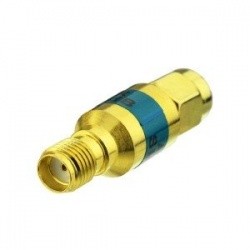
RF attenuator SMA 0-6 Ghz from -3 to -30dB 2W
13,20 €Out of stock, available within 1 monthReference: ANALYSEUR-TINYSA-1075
TinySA Spectrum analyser and RF signal generator 100 Khz to 960 MHz (Erik Hugen)
66,08 €69,00 €
In stock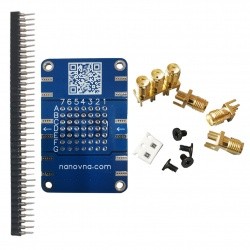 8,90 €
Reference: RFKONNECT-PCB-DEMO-KIT2-1077
Demo Kit PCB and RF testboard to assemble for VNA & NanoVNA
8,90 €In stock
Reviews
Additional or similar equipment
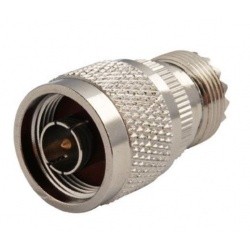
Adapter N Male UHF Female
RF adapter for N male to UHF female connector (SO239). Impedance 50 ohms.
9,70 € tax incl.In stock8,08 €tax excl.
-
Adapter N Male SMA Female
RF adapter for N male connector to SMA female connector.
9,20 € tax incl.In stock7,67 €tax excl.
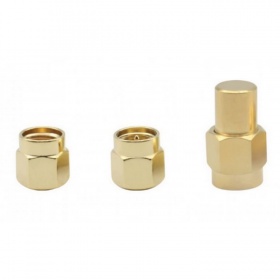
SMA Calibration Kit with 50 Ohm dummy load for MiniVNA NanoVNA & VNA
This calibration kit can be used with any SMA connector device, such as the MiniVNA Tiny and PRO2 or NanoVNA and any VNA.The SMA calibration kit consists of a dummy load of 50 ohms, an open circuit
19,90 € tax incl.In stock16,58 €tax excl.
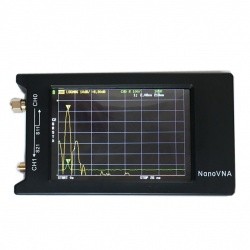
NanoVNA-H & H4 Vector Network Analyzer VNA 50Khz to 1500 Mhz
The NanoVNA-H and H4 is a low-cost and high-performance antenna and vector network (VNA) analyzer that covers the HF, VHF frequency bands from 50 KHz to 300 MHz with a sensitivity of 70dB, the UHF
65,00 € tax incl.54,17 €tax excl.
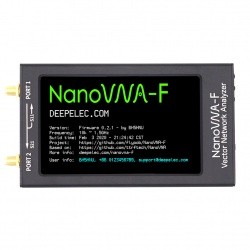
NanoVNA-F VNA antenna analyzer 50KHz-1500MHz metal case - Deepelec
The NanoVNA-F Deepelec version is the enhanced version of the open-source Antenna and Vector Network (VNA) analyzer that covers the HF, VHF and UHF bands from 50 KHz to 1500 MHz with metal case and
129,00 € tax incl.Out of stock, backorder available in 2-3 weeks107,50 €tax excl.
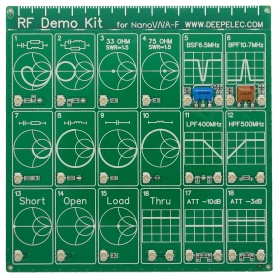
RF demo / test kit for NanoVNA vector analyzer antenna official Deepelec
This RF NanoVNA demo kit consists of a PCB which allows you to test or demonstrate the 18 RF functions or components listed below.This RF test card is recommended for demo and use with VNA antenna
21,60 € tax incl.Out of stock, available in 3 to 4 weeks18,00 €tax excl.
TinySA Spectrum analyser and RF signal generator 100 Khz to 960 MHz (Erik Hugen)
The tinySA is a mini portable spectrum analyser for the MF/HF/VHF bands from 100 KHz to 350 MHz and the UHF band from 240 MHz to 960 MHz in degraded mode.It features a switchable bandpass filter from
66,08 € tax incl.In stock55,07 €tax excl.
69,00 €-
Demo Kit PCB and RF testboard to assemble for VNA & NanoVNA
This NanoVNA RF demo kit is composed of a PCB to assemble, to perform tests or demonstration of RF integrated circuit (DIP) and SMT (SMT) components.Adapted to work with vector network analyzer
8,90 € tax incl.In stock7,42 €tax excl.
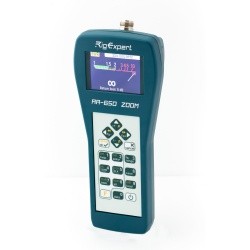
Antenna analyzer AA-650 Rigexpert 0.1-650Mhz Bluetooth (ex. AA-600)
The RigExpert AA-650 (former AA-600) is a powerful antenna analyzer designed to test, verify, tune or repair antennas and antenna feed lines operating from 0.1 to 650 Mhz and with bluetooth. The
699,00 € tax incl.Out of stock, available within 2 to 3 weeks582,50 €tax excl.
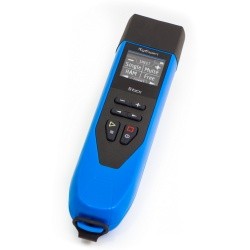
RigExpert Stick 230 antenna analyzer from 0.1 to 230 Mhz
The RigExpert Stick-230 antenna analyzer is designed to measure SWR (standing wave ratio), return loss, and other parameters of cable and antenna systems in the 100 kHz range at 230 MHz . It has an
333,00 € tax incl.Out of stock, available within 2 to 3 weeks277,50 €tax excl.
339,00 €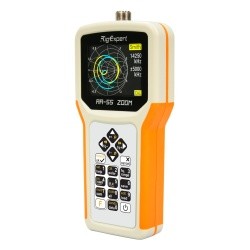
RigExpert AA-55 ZOOM Bluetooth Analyzer 60 kHz to 55 MHz
The RigExpert AA-55 ZOOM Bluetooth is designed to measure SWR (Standing Wave Ratio), return loss, cable loss, and other parameters of cable and antenna systems in the range from 60 kHz to 55 MHz . A
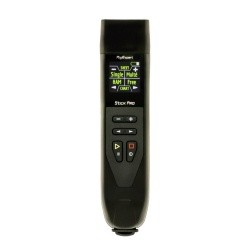
VNA Analyzer RigExpert Stick Pro 100 kHz to 600 MHz
The RigExpert Stick Pro is a vector analyzer (VNA) of antennas and cables. The analyzer allows you to measure various parameters of antennas, cables, lines, filters and many more in the frequency
469,00 € tax incl.Out of stock, available within 2 to 3 weeks390,83 €tax excl.
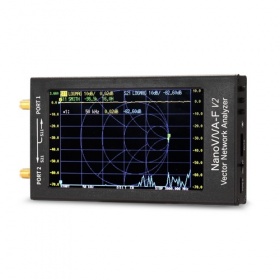
NANOVNA-F V2 3GHz Antenna Analyser 50kHz to 3000 MHz
The NanoVNA-F V2 is a new-generation vector network analyser designed to be both portable and self-contained, with a wide range of features. The analyser is equipped with a 4.3" IPS LCD display, a
198,58 € tax incl.In stock165,48 €tax excl.
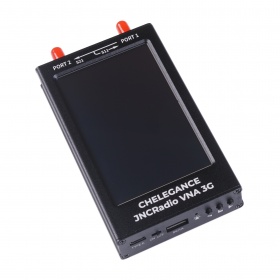
CHELEGANCE JNCRADIO VNA 3G - 50kHz to 3GHz Aluminium enclosure
JNCRadio's 3G VNA is a portable vector network analyser with frequency coverage from 50kHz to 3GHz. It is a more advanced product, built on the basis of the NanoVNA-F V2, with a much more powerful
249,53 € tax incl.Out of stock, available in 2 to 3 weeks207,94 €tax excl.
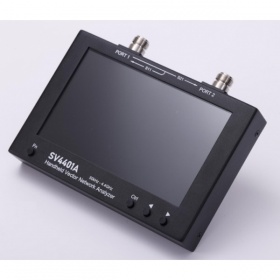
VNA SV4401A 4.4G 50kHz - 4.4GHz with 7" capacitive touch screen and N connector
The SV4401A is a portable vector network analyser (VNA) with a frequency range of 50kHz to 4.4GHz. It can be used for both S11 and S21 measurements. The S21 dynamic range is 75 dB, while the S11
489,00 € tax incl.In stock407,50 €tax excl.
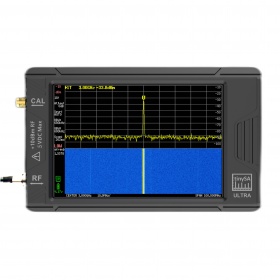
TinySA ULTRA Spectrum analyser & signal generator 100 Khz to 5.4 GHz
The tinySA ULTRA is the new, more powerful version of the mini portable spectrum analyser, for the MF/HF/VHF bands from 100 KHz to 800 MHz and the UHF and SHF bands from 800 MHz to 5400 MHz in ULTRA
168,36 € tax incl.In stock140,30 €tax excl.
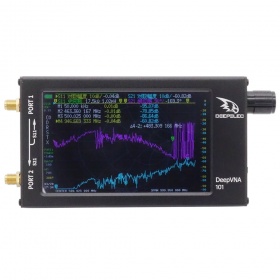
DeepVNA 101 VNA Antenna Analyser 10KHz to 1.5GHz - Deepelec
The DeepVNA 101 is Deepelec's latest model in the field of antenna and vector network analysers (VNA), with frequency coverage for measurements from 10 KHz to 1.5 GHz. This model is the optimised
135,00 € tax incl.In stock112,50 €tax excl.
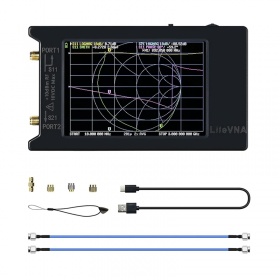
LiteVNA64 VNA antenna analyser from 50KHz to 6.3GHz
The LiteVNA64 is a touch-sensitive Vector Network Analyser (VNA) that offers advanced performance for HF, VHF, and UHF frequency testing, ranging from 50 KHz to 6.3 GHz. This is a significant upgrade
187,60 € tax incl.In stock156,33 €tax excl.
219,00 €
See more equipment
Europe & Overseas
Shipped from France
Product return
14 days to return, 2 warranty
Email support
Response within 24h to 72h
Secure payment
SSL, VISA, Mastercard, Paypal
Copyright 2014-2026 - Passion Radio / 4 MY PEOPLE
Les photos et coloris ne sont pas contractuels.